
9-day Costa Rica Pacific Coast Volunteer Trip
Community-Based Conservation in Costa Rica
Experience the wonder of protecting sea turtles and Resplendent Quetzals together with two community-based nonprofits in Costa Rica. Community-based conservation is an important distinguishing feature of Costa Rica’s acclaimed progressive environmental policies. Be part of community stewardship of sea turtles in this area rich in biodiversity. Experience the awe of watching sea turtles lay eggs and releasing newly hatched sea turtles as you help protect sea turtles nesting on the Pacific coast of Costa Rica.

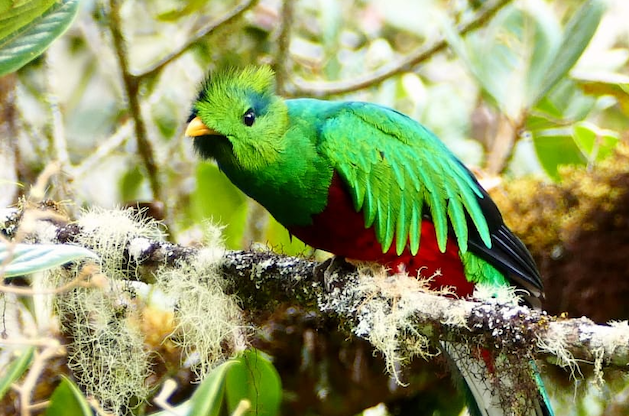
To experience even more community-based conservation efforts, after the conservation activities at Punta Banco the group will travel to the Costa Rica highlands and improve habitat for Resplendent Quetzals.
Conservation activities | Itinerary | Price | TRIP REVIEWS | Trip reports | Safety
Conservation Activities
Sea Turtle Conservation
On this Costa Rica Volunteer Trip, you help protect endangered sea turtles which nest on the beaches in Punta Banco, on the Burica Peninsula on the Pacific coast. Additionally, you will learn how sea turtle conservation can be managed by a community-based nonprofit, the Punta Banco Sea Turtle Conservation Project.
Conservation Issues
Global populations of sea turtles have decreased significantly in the last 30 years. Although there were once many species of sea turtle, only seven remain today. All of them are either threatened or endangered, two of them critically.
How You Help
During beach patrols at night and early morning, you will locate, excavate and relocate eggs in sea turtle nests to a protected turtle hatchery. 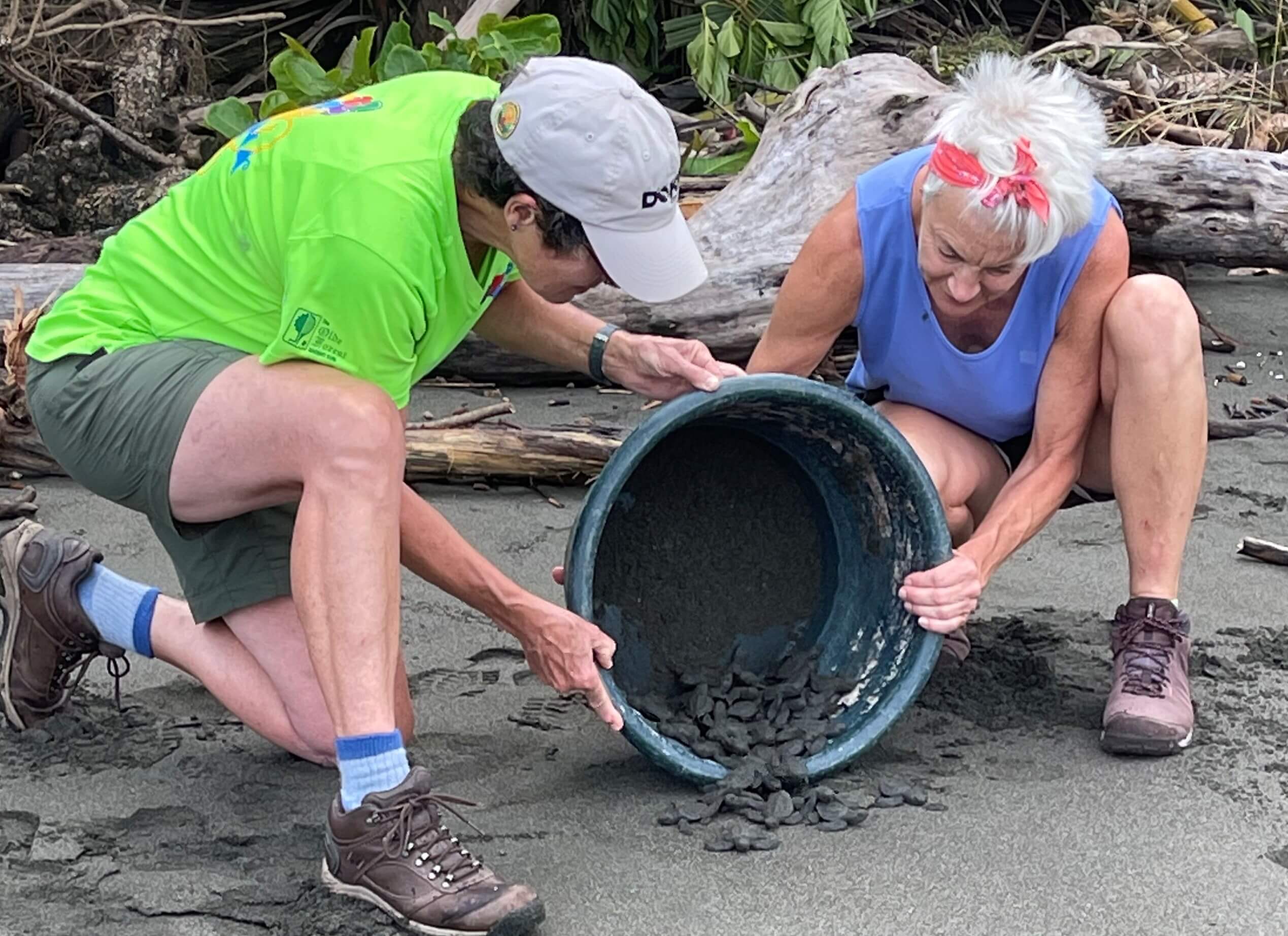 You will also help maintain and improve the hatchery.
In addition, you will help on projects to reduce beach erosion which threatens the turtle protection project. The group’s travelers will also experience the thrill of releasing newly hatched turtles!
 Read what Carolyn Ray from Journey Woman thought about her experiences on this trip here.
Resplendent Quetzal Conservation
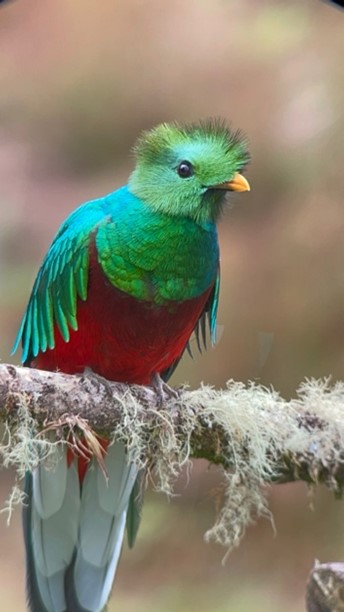 You will also volunteer on projects which support Resplendent Quetzal habitat in the highlands of Costa Rica. In Cerro de la Muerte, the group will collaborate with the community-based KABEK Families Pro-Quetzal Project.
Resplendent Quetzal Conservation Issues
The resplendent quetzal is threatened because of habitat destruction. They nest in dead trees, which are increasingly difficult for them to find.
How you Help
The activities to help Resplendent Quetzals include building nesting boxes, planting vegetation for Quetzal food supply, and improving trails to access Quetzal habitat.
Is this Trip Right for You?
You do not need prior experience, since we will train you on the trip. In order to safely enjoy the trip, you should be comfortable walking on soft sandy ocean beaches. You should also be comfortable hiking on uneven trails, some of which may be steep and muddy.
Itinerary |Price | TRIP REVIEWS | Trip reports | Safety
Itinerary
Day 1: Meet in San José, Costa Rica
Welcome to Costa Rica! We begin our trip in San José, Costa Rica with a 5:00 p.m. orientation meeting. During this orientation, you will meet your ConservationVIP trip leader, local guide, and fellow travelers. The leaders will also give you an overview of the exciting days ahead. Afterwards, the group will share its first dinner. (dinner and hotel lodging included).
Day 2: Travel to Dominical
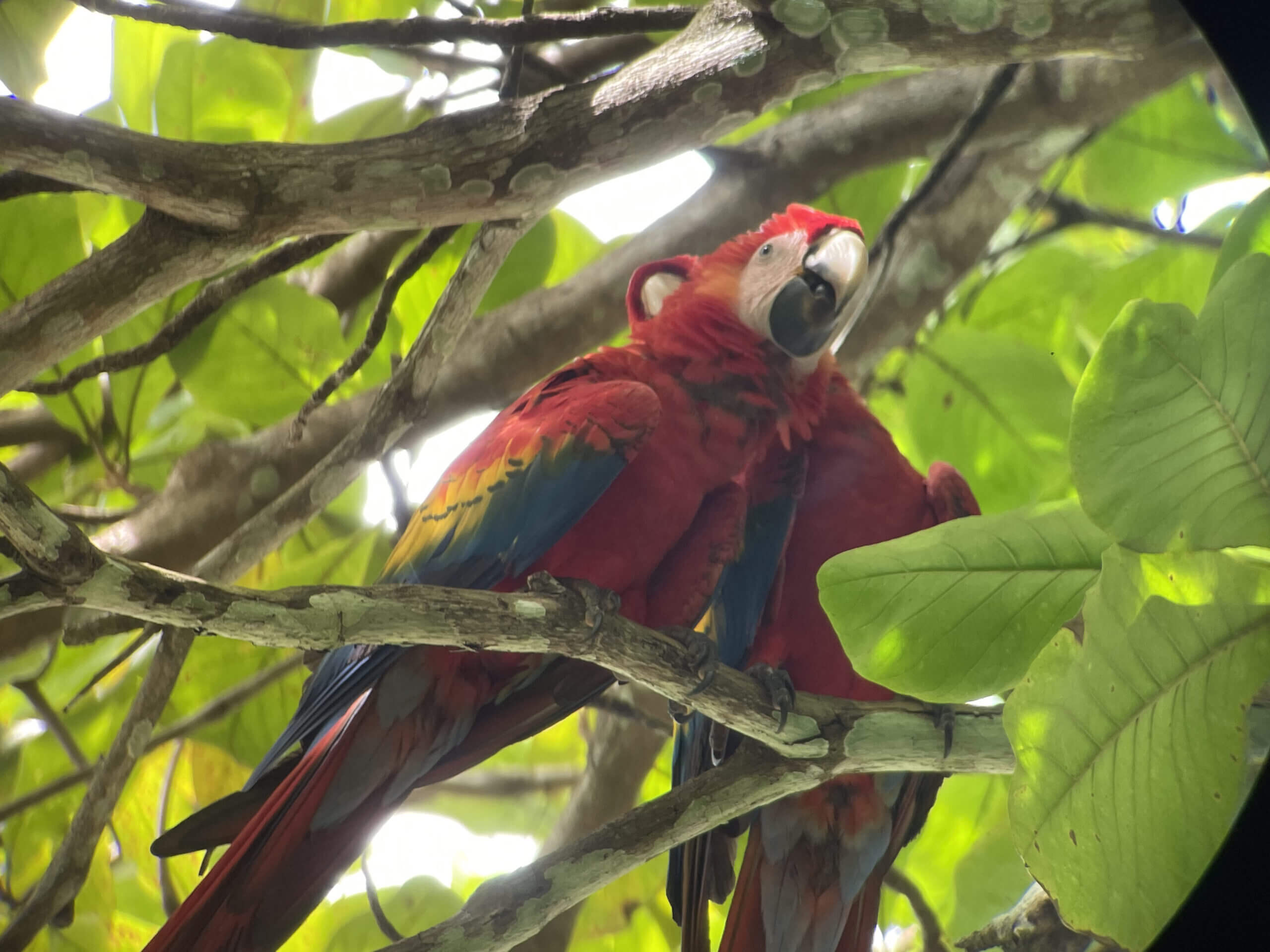 In the morning, we load up our gear and board our private bus to travel south along the Pacific Ocean. This beautiful route borders beaches and rainforests and is home to a variety of wildlife.
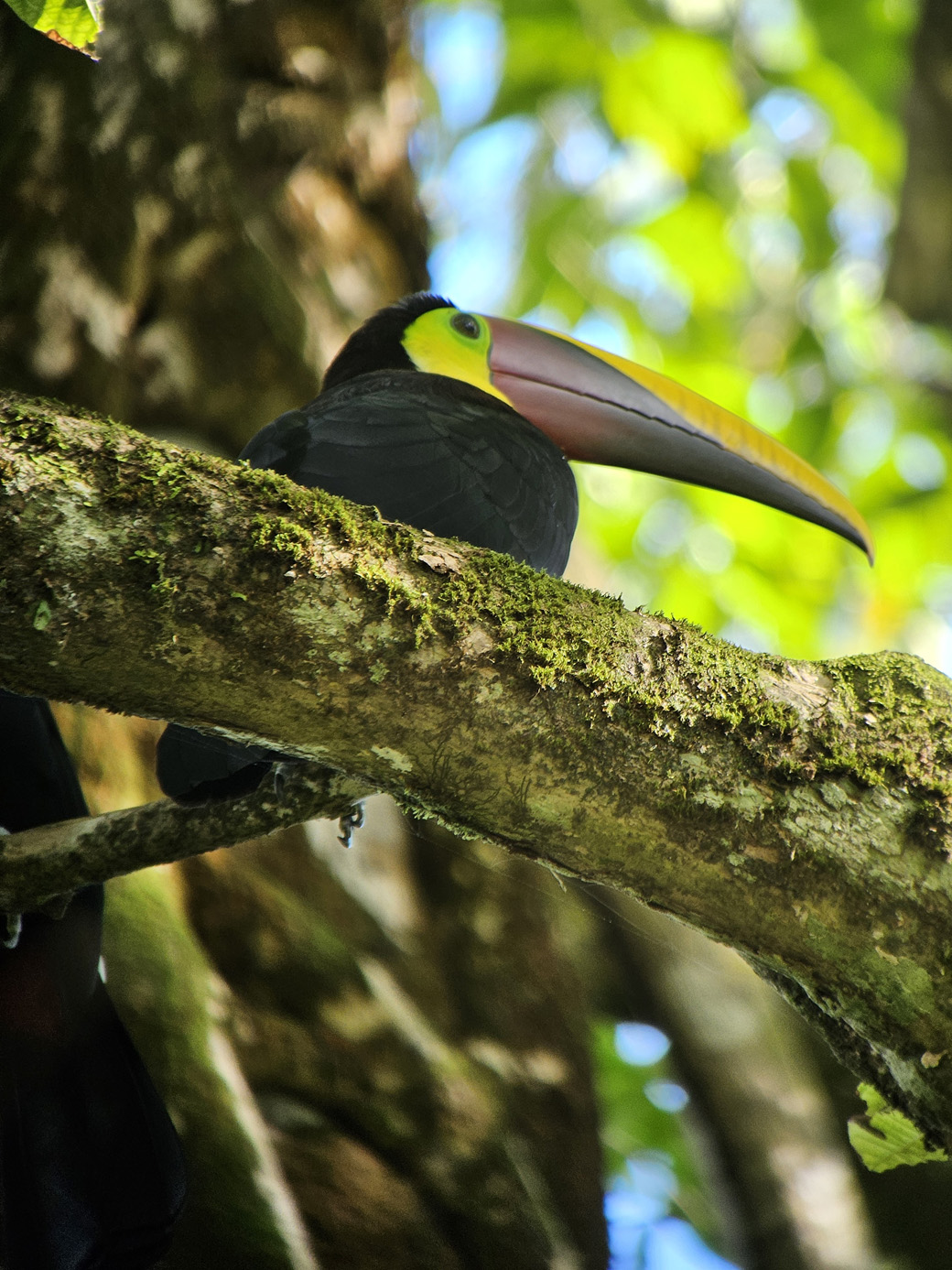 During our journey, our local expert guide will help you spot the abundant wildlife. Bring your camera – you might see scarlet macaws, crocodiles, toucans, monkeys, or more.
Finally, we spend the night at a local lodge At Dominical. (All meals and lodging included).
Day 3: Drive to Punta Banco, learn about protecting sea turtles
In the morning, we continue the drive south to Punta Banco which is located at the end of the road in southwestern Costa Rica. After checking into our lodging in Punta Banco, we will learn about the community-based sea turtle conservation project and the important role which turtles play in the environment before we begin our project to protect sea turtles. (All meals and lodging included).
Days 4 – 6: Protecting Sea Turtles in Punta Banco
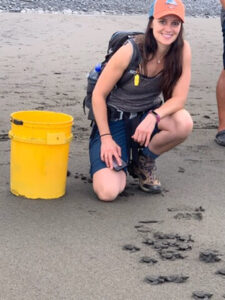 During these conservation project days, the group will participate in late night and early morning beach patrols to locate sea turtle nests. When a nest is located, we excavate and relocate the sea turtle eggs to a protected turtle hatchery.
Conservation activities will also include a variety of other tasks. These include maintaining the turtle hatchery, as well as beach erosion projects to help protect the turtle nursery. One of the most exciting activities is releasing newly hatched turtles! (All meals and lodging included).
Day 7: Journey to the Costa Rica Highlands
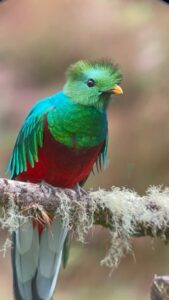 In the morning we will say goodbye to our Punta Banco partners after breakfast. Then we journey north to the highland forest area near Cerro de la Muerte.
This region is very likely the best place in the world for observing resplendent quetzals, birds so spectacularly beautiful they were considered divine entities by the ancient Aztecs and Mayans. We will have lunch along the drive, then continue to our hotel in Cerro del Muerte and introduction to the Quetzal projects. (All meals and lodging included.)
Day 8: Support the Resplendent Quetzal
To support the quetzal population, you will build quetzal nests and erect them at a site chosen by the community quetzal support group. In addition, you will plant wild avocado trees – a favorite food for the quetzal – near the new nest. You will also help maintain trails which birders use for quetzal viewing. (All meals and lodging included.)
Day 9: Return to San José and complete your volunteer trip in Costa Rica
In the morning, we will drive for approximately 3 hours to the airport in San José where the Costa Rica Volunteer Trip ends. You may board a flight home from the San José airport after 1:30 p.m. or opt to extend your stay in Costa Rica.
IMPORTANT NOTES about the Itinerary:
- Before purchasing your airline tickets, please check with us to ensure the trip has the necessary minimum number of participants required to operate.
- When you purchase your airline tickets, be sure the schedule will get you to Costa Rica in time for the initial meeting. In order to be there on time, you will probably have to depart your hometown one or more days in advance.
- Although we do our very best to adhere to the itinerary above, it is subject to change for reasons beyond our control, including changes in the local project needs, weather, and terrain conditions.
Price | TRIP REVIEWS | Trip reports | Safety
Trip Price
$2,995 per person double occupancy for nine days; single room at hotels is $600 additional (subject to availability – see below)
(Note: Your trip expense may be tax-deductible. To explain how, see our Frequently Asked Questions page and consult your tax adviser for details.)
Price includes:
- ConservationVIP trip leadership and support staff
- All meals from dinner on Day 1 through breakfast on the final day
- All lodging is included. The lodging is double occupancy, unless a single is requested.
- Transportation as noted on the itinerary.
- Gratuities for services provided to the group.
- Group tools
- Orientation and training
Price does not include:
- Travel costs to and from San José, Costa Rica
- Medical immunizations
- Insurance (emergency medical and evacuation insurance is mandatory for this trip)
- Excess baggage charges
- Alcoholic beverages or soft drinks
- Personal items
Payment terms:
A deposit of $500 per person ($600 for requested single) is required at the time of signup. Final payment is due at 90 days prior to departure. The payment and refund policy can be found here.
Group Size: 8 – 12 plus trip leaders
Trip Reviews
Submit your review | |
An amazing trip, filled with wildlife, cultural interactions, wonderful food, and a sense of purpose. Our trip leaders were great and our local guide, Marco, was beyond fabulous. We were so fortunate to get to see and participate in the full lifecycle of turtle egg laying and hatching, while helping maintain the hatchery and work with the local community. The variety of wildlife we were able to see was thrilling - two-toed sloth and babies, several types of monkeys, many birds, including the beautiful quetzal, and a multitude of other flora and fauna. The fresh local cuisine was fabulous and accommodations were all quite satisfactory. Be prepared for some high humidity and wet conditions! Our fabulous team got to experience authentic Costa Rican culture this week, an unforgettable experience.
Everything was amazing! Costa Rica is beautiful and the people are warm and friendly. The group this time consisted of seven women and I think everyone was amazed at how much we got done and how hard we worked. Jim and Mark were great as leaders and Marco, our guide is funny and so knowledgeable.
I’m so happy I joined this ConservationVIP trip! At Punta Banco our all Women team released hundreds of baby turtles and watched them scurry to the ocean, dug out old sand and replaced with new sand, rebuilt the hatchery structure, built a wall in front of another hatchery, and did as much as we could for the turtles. At night patrol we saw a female Olive Ridley Turtle lay eggs and return to the ocean. Local people go on night patrol and gather clutches of eggs and transfer them to the hatchery for incubation. We spent time observing a breathtaking diversity of Costa Rican wildlife, including scarlet macaws, toucans, a sloth, and the resplendent quetzal. We worked in tropical heat and humidity at Punta Banco, and in cool mountain air at Cerro de la Muerte. Many thanks to Jim and Mark, our ConservationVIP leaders, and Marco, our awesome Costa Rican guide, Sergio, our driver, who kept us safe and comfortable along our journey, and to my fellow travelers for an amazing nine days. To anyone considering this trip, I highly recommend it!
What an incredible and unforgettable experience. It exceeded all of my expectations. The experience with the sea turtles could not be beat. We worked next to local experts in the hatching and releasing process. The work was so fulfilling. Staying in a small lodge in the community and eating at local establishments made you feel so welcome.
I’m so happy to have been able to join this ConservationVIP trip! From start to finish, our days were filled with meaningful work, new experiences, and wonderful company. As a team, we worked hard to construct turtle hatcheries in Punta Banco and to improve quetzal habitat in Cerro de la Muerte. We also enjoyed incredible experiences. We witnessed a mama olive ridley sea turtle lay her eggs, and we helped collect these eggs so that they could safely incubate in the hatchery. We released newly hatched turtles and watched them begin life by scurrying from the beach to the ocean. We spent time observing a breathtaking diversity of Costa Rican wildlife, including scarlet macaws, toucans, three species of monkeys, a sloth, and the resplendent quetzal. We worked in tropical heat and humidity at Punta Banco, and in cool mountain air at Cerro de la Muerte. We were treated to good food and were introduced to some fruits and dishes that are uniquely Costa Rican. Many thanks to Jim and Chris, our ConservationVIP leaders, Alex, our awesome Costa Rican guide, Sergio, our driver, who kept us safe and comfortable along our journey, and to my fellow travelers for an amazing nine days. To anyone considering this trip, I highly recommend it!
It only took a split second before I was reminding myself why I was in Punta Banco after stepping off that bus. I had to get my head in the game! I stepped into a world so foreign to my “normal” life! The heat and humidity, the birds, the monkey’s, the iguanas and the turtles - ohhhh those incredibly amazing turtles - a bucket list adventure of a lifetime for me with some truly amazing people - all there with the same mission in mind - save the turtles. My life will never be the same! After 5 days of hard work in Punta Banco, the adventure continued to the highlands altitude of 8500 ft. We worked hard every day of this trip to make a difference and to give back for the greater good.
On the second half of the trip we built trails, nesting habitat and planted avocado trees.
Humans are responsible for taking away some of this vital habitat for these creatures - It was so awesome to try to improve their odds for survival and relieve their burden.
Wow. What an incredible 9 days in Costa Rica with Conservation VIP. Watched a momma Olive Ridley turtle lay 124 eggs in her self built nest on the beach, and watched another 100 or so newborn OIive Ridley's be released to scurry into the ocean to a new beginning. Such a rewarding experience. All of us worked pretty dang hard for the cause. It was worth every sweat soaked shirt we created. We made a difference in Punta Banca, and it made a difference on us. And the Quetzal's! Built a nest, cleared a trail, built some steps, planted a bunch of avocado trees and saw several of these beautiful birds in the wild. A big highlight for us was the close relationship and connection Conservation VIP and our incredible local host Alex have with the small local communities and the people within them. We met and worked alongside some wonderful local people, even danced with a few. 🙂 We wouldn't hesitate to participate in another Conservation VIP excursion. Thank you Alex, Sergio, Chris and Jim! Loved every minute of it.
What a great trip. A wonderful way to experience the real Costa Rica while doing important conservation work. This was my first trip with Conservation VIP, but certainly won't be my last. As I write this review, I am still in Costa Rica, enjoying an extended vacation. The volunteer portion of my trip has surpassed my experiences as a tourist. After our work days, we had time for exploring the local flora and fauna. Our gude Alex was incredibly knowledgeable. I saw more animals and plants on our hikes with him then on the subsequent tours that I paid for! The work part of the trip was difficult, but incredibly rewarding. I have shown my videos of turtles hatching and being released to several guides here who have never seen this! So, if you want to have experiences that not even locals have, join this trip! BTW, you will have amazing homemade meals, way better than the overpriced restaurants in Costa Rica.
Gear List for the Costa Rica Volunteer Trip
The key to staying comfortable while on an active trip is layering. You will spend time both in the warm, humid beach climate and in the cooler highlands. Because of the variety of environments, in order to get maximum comfort with minimum weight, you need versatile layers that mix and match to create the right amount of insulation, ventilation and weather protection.
Another important gear issue for this trip is that you will need to bring dark clothing and a headlamp with a red bulb. This gear is necessary to protect the sea turtles laying eggs when you patrol the beach at night looking for sea turtle nests.
The Costa Rica gear list has been created to help you in choosing your equipment for the trip. View the Gear List.
Trip Reports
Please click on the links below to read Trip Reports from completed Costa Rica volunteer trips.
2025 September
2024 September
2023 September
2022 October
2021 October
2021 September
2019 October
2018 October
2018 September
2017 December
Safety is our Priority
ConservationVIP has always focused on our travelers’ safety. Consequently, we know from experience that traveling with safety concerns requires some extra planning and flexibility both for trip leaders and travelers!
Match Your Abilities with the Trip
In order to safely enjoy the trip, choose a trip which suits your abilities. For this Costa Rica Volunteer Trip, you should be comfortable hiking on soft sandy ocean beaches and uneven trails, some of which may be steep and muddy.
Follow Trip Leader’s Instructions
In order to prevent injury or illness on the trip, you will need to follow the trip leader’s instructions. The leaders will explain site-specific procedures and provide safety instructions on the trip.
Medical Advice
Please check with your doctor to see if any immunizations are recommended for you.
Comply with other Travel Restrictions
Finally, you will also have to comply with any restrictions imposed by Costa Rica and your country of origin at the time of travel. While we know that restrictions can change between now and the time of travel, we cannot predict what those changes will be.